
Why Do We Say "Cost a Pretty Penny"?

Written by
Ani
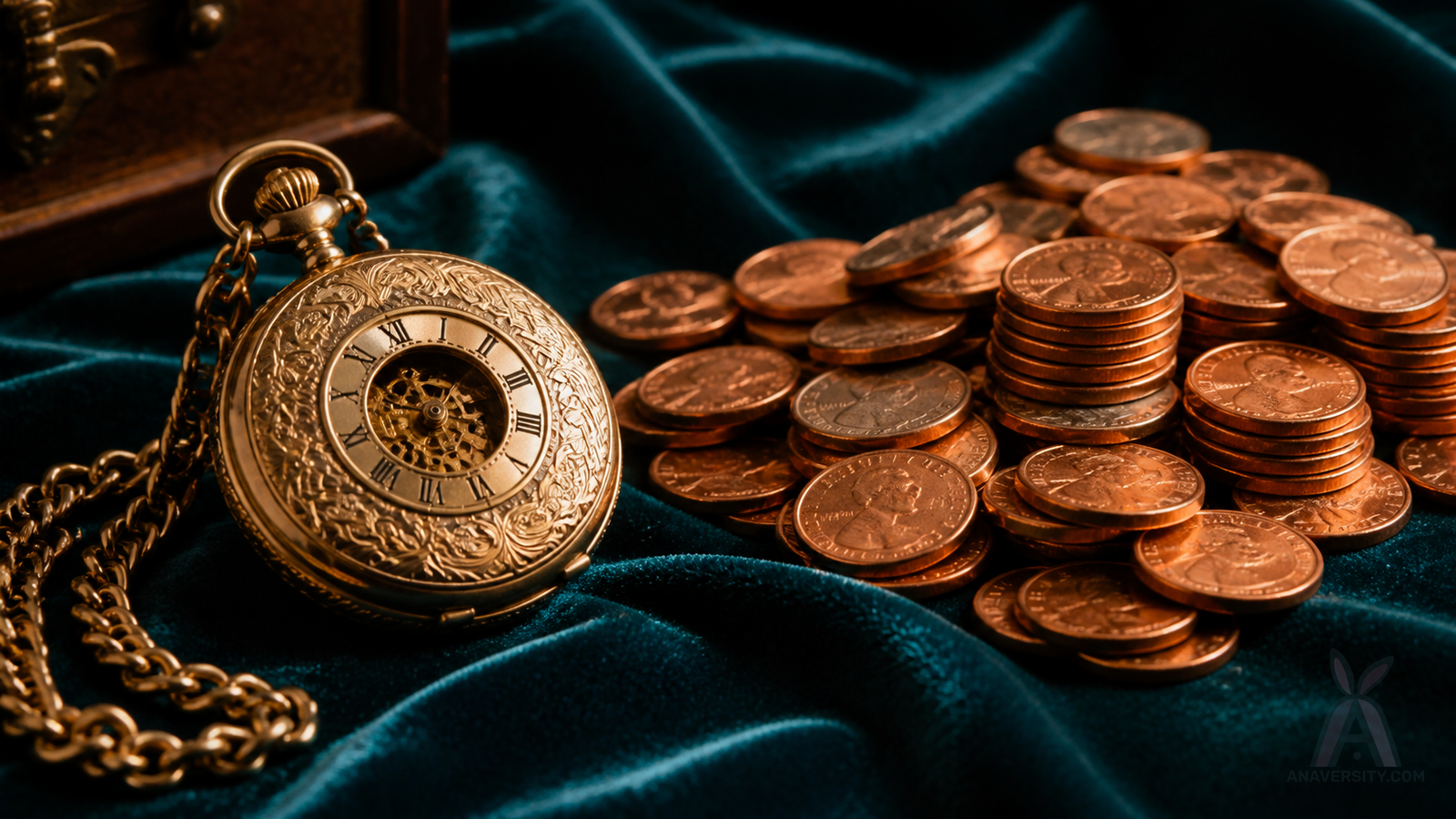
Pretty once carried the sense of considerable, while penny could stand for money generally rather than one tiny coin.
A pretty penny means a large sum because older pretty could intensify an amount and penny could represent money as a whole.
Pretty is measuring size, not beauty
Modern learners may hear pretty mainly in a pretty dress or as the adverb in pretty good. The word has also carried the sense considerable or substantial. That meaning survives in phrases such as a pretty profit, a pretty mess, and a pretty penny. The amount, not the coin's appearance, is being judged.
One penny can represent money in general
A penny is a small unit, but currency names often stand for money as a category. English can say earn an honest penny or not spend a penny without focusing on one physical coin. In a pretty penny, the small noun and the intensifying adjective combine to mean a notably large sum.
The expression has eighteenth-century roots
Written examples of a pretty penny appear in the early eighteenth century and use it for worthwhile earnings or a considerable amount. The phrase later settled comfortably into the pattern cost a pretty penny, where it comments on a high price, often with a hint of amazement, complaint, or reluctant admiration.
The tiny coin gives the phrase its charm
English could simply say a lot of money, but a pretty penny sounds more textured and slightly old-fashioned. The contrast between a penny's small value and the phrase's large total may help it stick, even though the historical meaning does not require deliberate irony. Familiar alliteration also keeps the two p sounds together.
Use it for expense, not an exact price
Say That repair cost a pretty penny when the exact figure matters less than the speaker's sense that it was expensive. The phrase is informal and evaluative. It can also describe earnings: They made a pretty penny from the sale. In both cases, the pretty part measures a considerable total rather than admiring the cash. It reports an impression, not a measurable price category.
Keep going
Turn this story into practicePost your own sentence with a phrase from the story, ask what sounds natural, or share what surprised you.Post in Campus FeedRelated words
Related stories
Phrase Origin
Why do we say "cost an arm and a leg"?
A dramatic price idiom that turns expense into physical loss. The phrase is not subtle. That is the point: the price feels painfully high.
Read story
Phrase Origin
Why do we say "small talk"?
A phrase for light conversation that may be small in topic but large in social purpose, especially for learners entering real English spaces. Small talk is not...
Read storyOpen the dictionary entry for definitions, examples, and learner-friendly usage notes.
Look up prettyComments
Join the conversation
Logged-in learners can comment on stories, explainers, and reply to others.
No comments yet. Be the first to start the discussion!