
What's the difference between 'the present perfect simple' and 'continuous'?

Written by
Ana
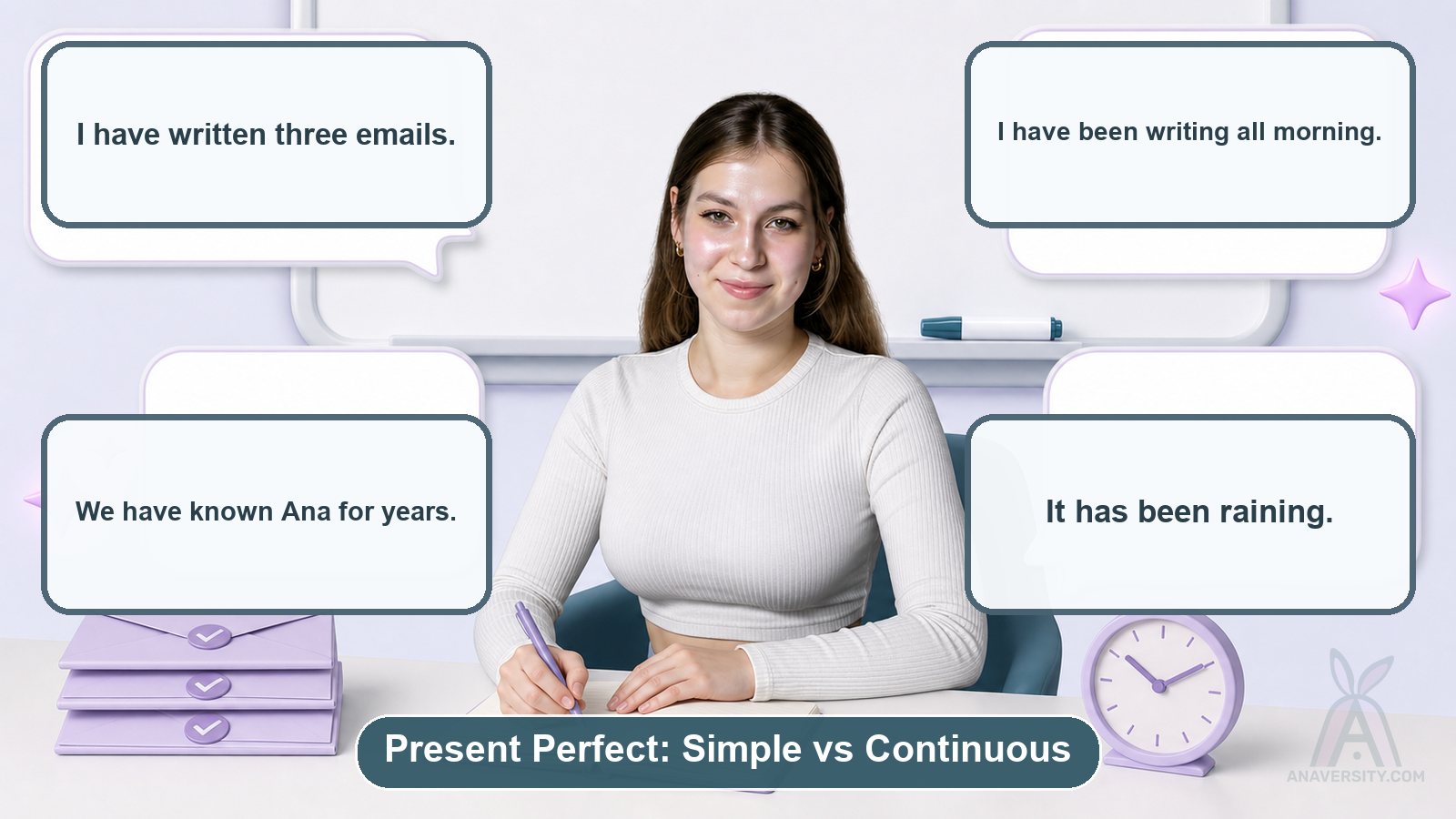
Use the present perfect simple for a completed result or a total: I have written three emails. Use the present perfect continuous for an activity continuing until now or explaining present evidence: I have been writing all morning. Some verbs, especially state verbs, rarely use the continuous form.
- I have read the report.
- She has made four calls.
- I have been reading the report.
- She has been making calls all morning.
Ask whether the sentence counts a result or looks inside an activity and its duration.
Quick rule

By Mr. Paneer
A1–A2
Use have/has + past participle for a result, completion, or number. Use have/has been + -ing for an activity over time. She has painted the room shows the finished result. She has been painting the room focuses on the activity and may mean it is unfinished.
Result and activity side by side
| SIMPLE | CONTINUOUS |
|---|---|
| I have read the report. | I have been reading the report. |
| She has made four calls. | She has been making calls all morning. |
| We have known Ana for years. | We have been waiting for an hour. |
| The rain has stopped. | It has been raining. |
The simple form counts or presents a result. The continuous form opens a window onto the activity.
Signals that often help
Remember it like this
The simple form shows the scoreboard. The continuous form shows the game in progress.
In practice

By Ani
B1–B2
A present result can choose either form with a different focus: Your hands are blue. You have painted the door stresses the result; You have been painting explains the evidence.
Choose simple for totals and continuous for duration or activity.
Practice: 1 of 4
She five chapters today.
Worth knowing
By Ana
C1+
The continuous form is not automatically unfinished. I have been cleaning the kitchen can describe a recently finished activity when the present evidence matters. Focus, not just completion, drives the choice. State verbs such as know, believe, and own normally favor the simple form.
Keep result versus activity as the main contrast, then check whether the verb can naturally be continuous.
Keep going
Grammar
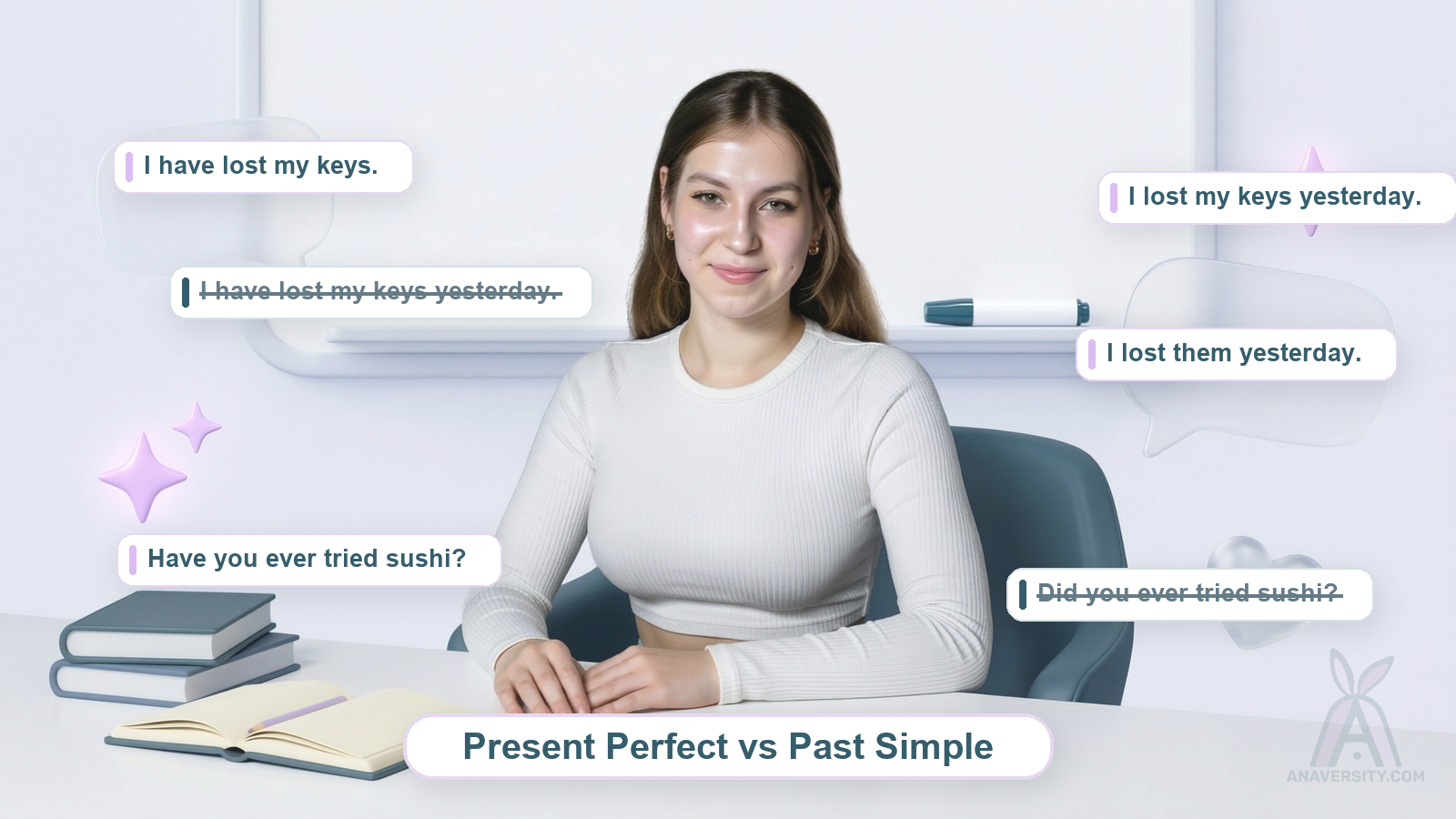
What's the difference between present perfect and past simple?
Finished story or present result? This is where tense choice stops feeling like a coin toss.
Read explainer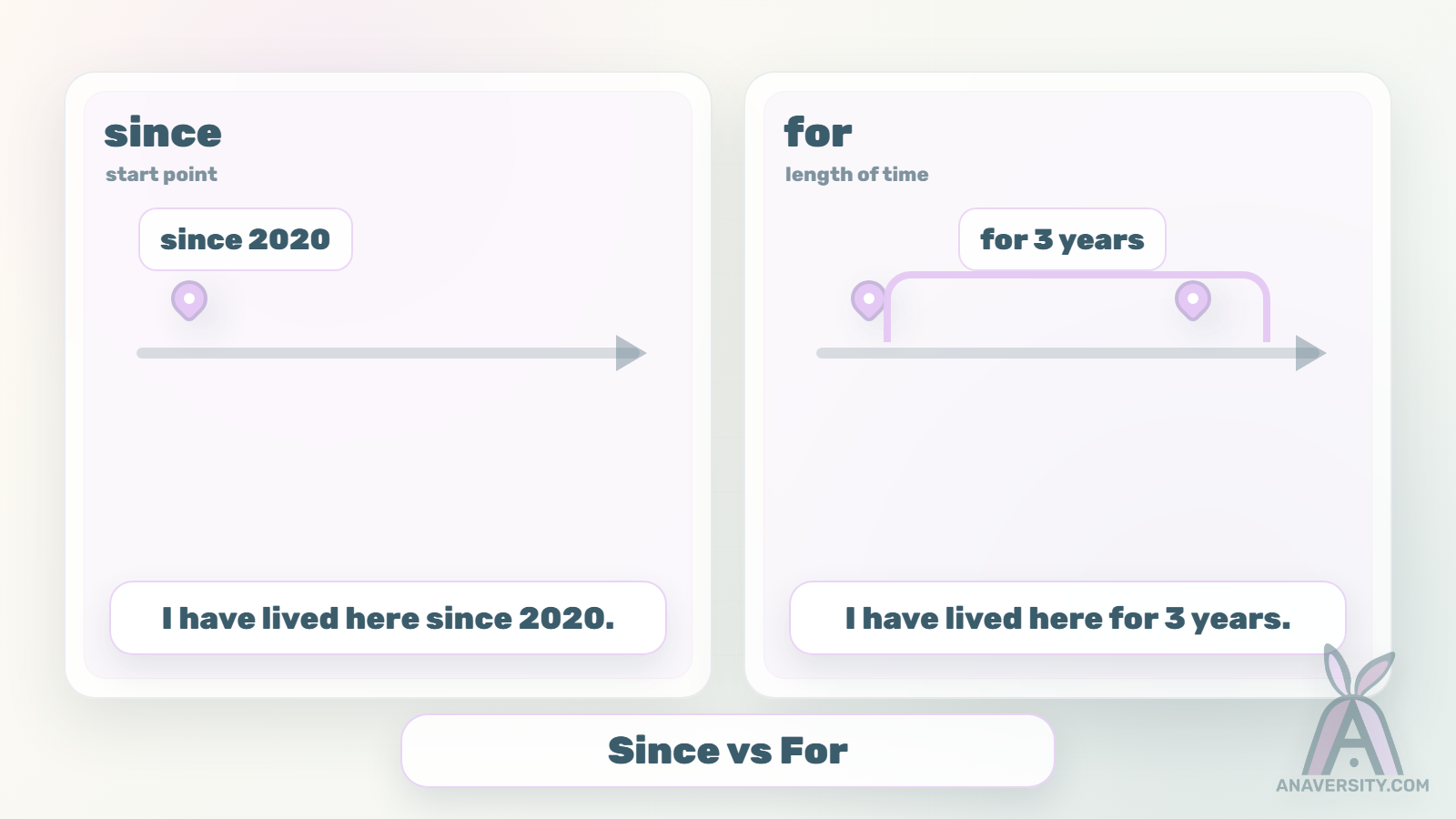
Grammar
What's the difference between 'since' and 'for'?
Same timeline, different lens: one points to the start, one measures the stretch.
Read explainerComments
Join the conversation
Logged-in learners can comment on stories, explainers, and reply to others.
No comments yet. Be the first to start the discussion!
Want to lock this in?
Pick what works for you
1-on-1 Classes with Ana
Learn from the person behind Anaversity. Every class is built around your level, goals, and pace.

Practise perfect forms
Run a quick workout on this rule. Track progress on your campus dashboard.
Practice with Ani
Ask Ani any time you mix this up in writing. Instant correction, no judgment.